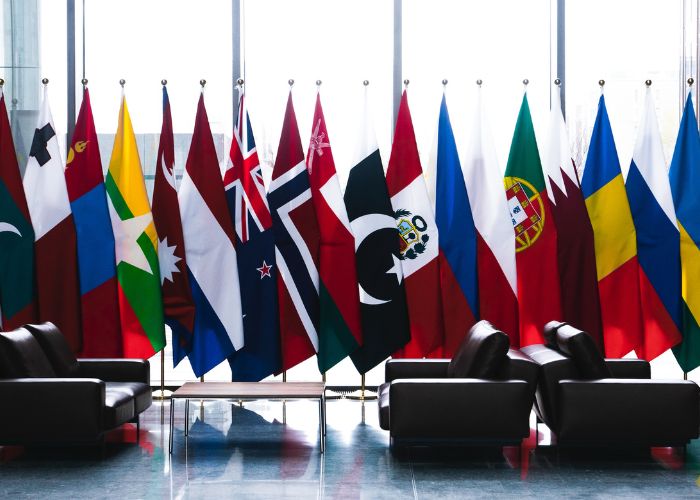
International Politics & Diplomatic Relations
Gain a solid understanding of key political theories and frameworks that shape international relations and global governance, empowering you to navigate the complex landscape of world politics with confidence.
International Politics & Diplomatic Relations
International Politics & Diplomatic Relations
Master the Core Theories and Dynamics of Global Political Systems
What You'll Learn
Unit 1: Foundations of Global Politics
- Understand fundamental political concepts, ideologies, and systems of governance.
- Explore the realist and liberal traditions in international relations.
- Examine the consequences and challenges of the modern state system.
Unit 2: Globalisation, Sovereignty, and Nation-States
- Examine the impact of globalization on national sovereignty and governance.
- Analyze the role of nation-states and supranational organizations in world politics.
- Assess how global interdependence influences political and economic relationships.
Unit 3: Political and Economic Dimensions of Global Governance
- Understand the political structures that support international cooperation and decision-making.
- Evaluate the role of global institutions such as the International Monetary Fund (IMF), World Trade Organization (WTO), and World Bank.
- Explore the relationship between politics, economics, and international policymaking.
Unit 4: Human Rights, Environment, and Global Justice
- Examine the role of international law in promoting and protecting human rights.
- Understand global environmental governance and climate diplomacy.
- Assess the challenges of balancing sovereignty, justice, and collective global responsibility.
Unit 5: Power and Diplomacy in International Politics
- Explore the dynamics of power distribution within the international system.
- Understand the role of diplomacy, negotiation, and conflict resolution in global affairs.
- Analyze the influence of regional organizations such as the European Union on international politics.
Unit 6: Applied Diplomacy and Protocol in Practice
- Understand the roles and responsibilities of protocol officers in diplomatic environments.
- Apply diplomatic protocols when managing international events, meetings, and official missions.
- Analyze case studies of successful and unsuccessful diplomatic negotiations.
Course Description
International politics influences every aspect of today's interconnected world. This course provides a comprehensive introduction to the theories, institutions, and practices that shape international relations and global governance, helping you understand how political, economic, and diplomatic forces interact on the world stage.
You'll explore major political ideologies, international relations theories, globalization, sovereignty, diplomacy, human rights, international organizations, conflict resolution, and global policy development. Through practical case studies and contemporary global examples, you'll develop the analytical skills needed to evaluate international events, understand geopolitical challenges, and appreciate the complexities of modern diplomacy.
Whether you're pursuing a career in international affairs, diplomacy, government, public policy, or global business, this course provides a strong foundation for understanding and engaging with today's evolving international landscape.
Who Should Enroll?
This course is ideal for students, policymakers, government officials, diplomats, business professionals, researchers, NGO professionals, international relations practitioners, and anyone interested in global politics, diplomacy, and international governance.
Overview
Gain a solid understanding of key political theories and frameworks that shape international relations and global governance, empowering you to navigate the complex landscape of world politics with confidence.
- Understand the core theories and principles of international politics.
- Analyze global political systems and international governance structures.
- Explain the impact of globalization on sovereignty and international relations.
- Evaluate the role of international organizations such as the IMF, WTO, United Nations, and World Bank.
- Assess the relationship between politics, economics, diplomacy, and global governance.
- Understand international law, human rights, and environmental diplomacy.
- Apply diplomatic communication, negotiation, and protocol principles.
- Analyze international conflicts and approaches to peaceful resolution.
- Evaluate contemporary geopolitical issues using established political frameworks.
- Develop informed perspectives on global political and diplomatic challenges.
- An interest in international relations, politics, diplomacy, or global affairs.
- Basic knowledge of current affairs (recommended but not required).
- A willingness to participate in discussions, case studies, and analytical exercises.
- Access to a computer and internet connection for online learning (if applicable).
- Active participation throughout the programme.